






Everyone remembers it. Everyone did it. It has become a rite so etched into past video gaming lore as to be almost sacred. The authorities on the matter warned us it would damage the cartridges, but we wouldn't listen. Like a medicine man doing a rain dance to help his crops, we, the children of the games, would blow on the bottom of video games when they wouldn't work, desparately hoping it would revive it.
...and ...in actuality... it did about as much good as doing a rain dance would have, too.
Most collectors and retro video game enthusiasts now know that blowing on the bottom did almost nothing to clean anything off of it, and could instead cause long-term damage. Yet so ingrained is this habit that to this day, despite my knowledge of the workings of the technology, despite all I have read about it, despite having a system fail due to corrosion... I still sometimes break down and do it when a game isn't working.
The basic issue with games sometimes not working was that the system was unable to communicate with the various chips on the inside of the cartridge itself. This could be because the connector pins inside the system, which pressed down onto the contacts on the bottom of the cartridge, had lost enough tension such that they didn't press well onto it, or it could have been from either dirt or grime buildup or other things on the cartridge contacts or the system's cartridge slot pins which would prevent a good signal getting through.
And neither of those situations would be helped by blowing on it. Were it a buildup of grime, blowing on the cartridge would not be enough force to clean it - the moisture might even make it worse. Were it the connector pins not pressing down well, obviously blowing on it wouldn't help with that either.
The real benefit of the process was not the blowing on the cartridge, but the taking out of the cartridge and putting it back it. This would reseat the pins against the contacts (the 'fingers' on the bottom of the cartridge), possibly in a better arrangement. The fact that blowing on the cartridge required you to remove the game and put it back in made it seem like it worked. In a way, like taking a placebo pill with water, and it improving your health because you're drinking more water.
The blowing on the cartridge was discouraged because the moisture from our breath could cause corrosion, many times of the less visible parts inside the system or game. My old, dead Super Nintendo has the clear markings of corrosion at the base of the slot the cartridge was connected into (being vertical, droplets could drip right into it and simply sit there), but not of the actual pins themselves, interestingly.
Cleaning
Cleaning kits were the most common solution to dirty carts. A little bit of rubbing alcohol and some type of scrubber were common. Nowadays, people often have their own different 'magic' formulas or tools for cleaning - such as pastes, clothes, cleaners and the like, but it generally involves using cleaning alcohol to try and dissolve some of the gunk and then wipe it off using a Q-tip or a soft cloth or the like.
While it would clean them, scrubbing too harshly could also damage the contacts, slowly wearing down their plating, which is why things like sand paper are usually not ideal. While it can make things look very clean, it may make it much more likely to have problems over time as you slowly get rid of the actual material.
The truly brave are those who, having a cartridge with corroded or worn down traces, re-tin them with solder to get them working again. It's risky if you're not used to soldering, and certainly not ideal, but it can and has been done. However, at this level, it's is probably best reserved for only the cartridges really worth saving.
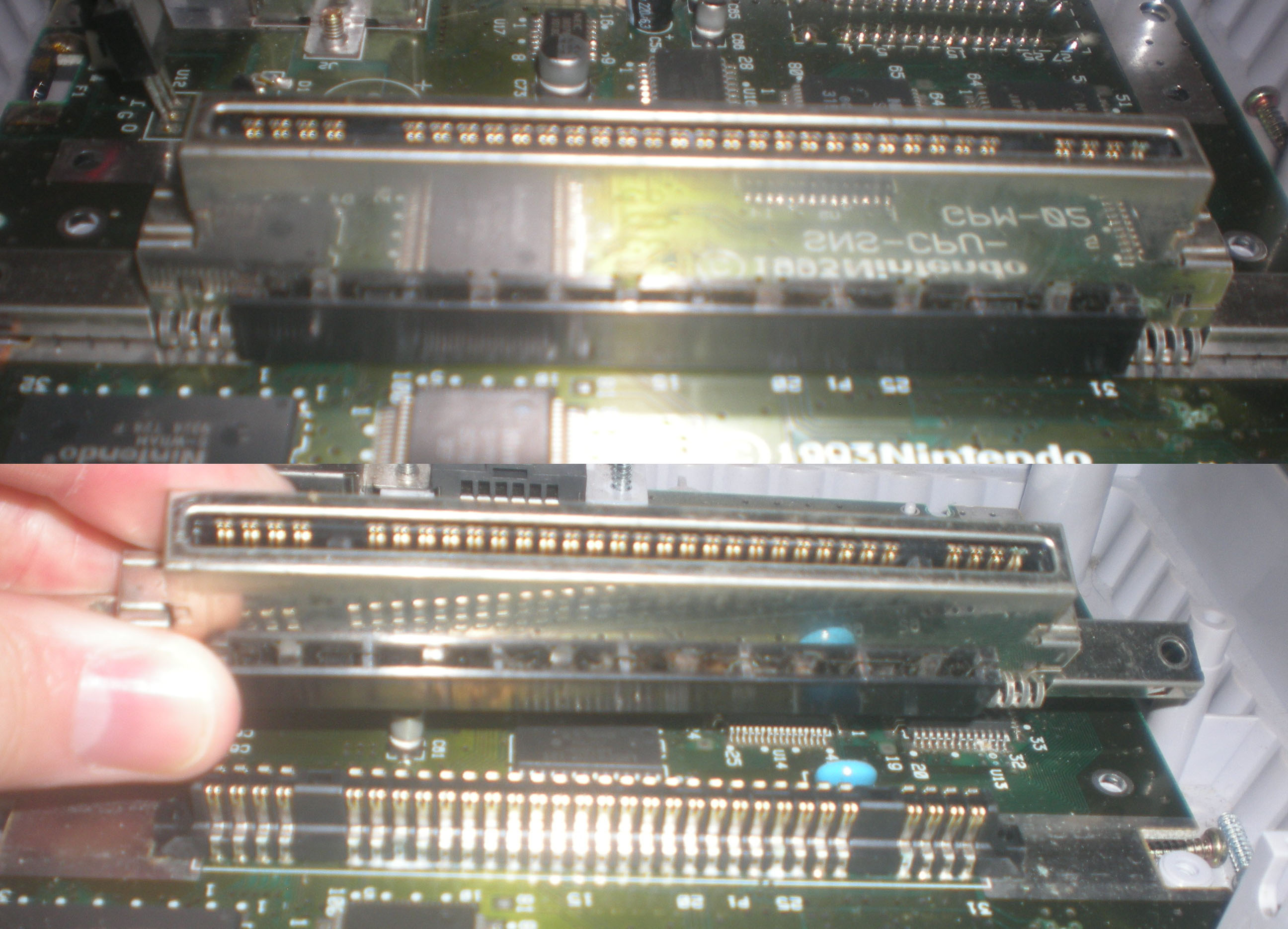
The removable SNES cartridge connector.
Bad Pins
If the main issue is not with the game but with the slot inside the system, it may take a bit more work. Generally, you're going to need to open up the system (often requiring specialized bits to take out the screws). Once you have better access, you can use alcohol to rub clean the pins or rub the connection between the board and the connector (which is very similar to the ones on a cartridge).
As for the slow bending of the connector's pins over time, that's not so easy, requiring you to open the system and attempt to either bend the pins back, or as a last resort, remove the connector and buy a new one.
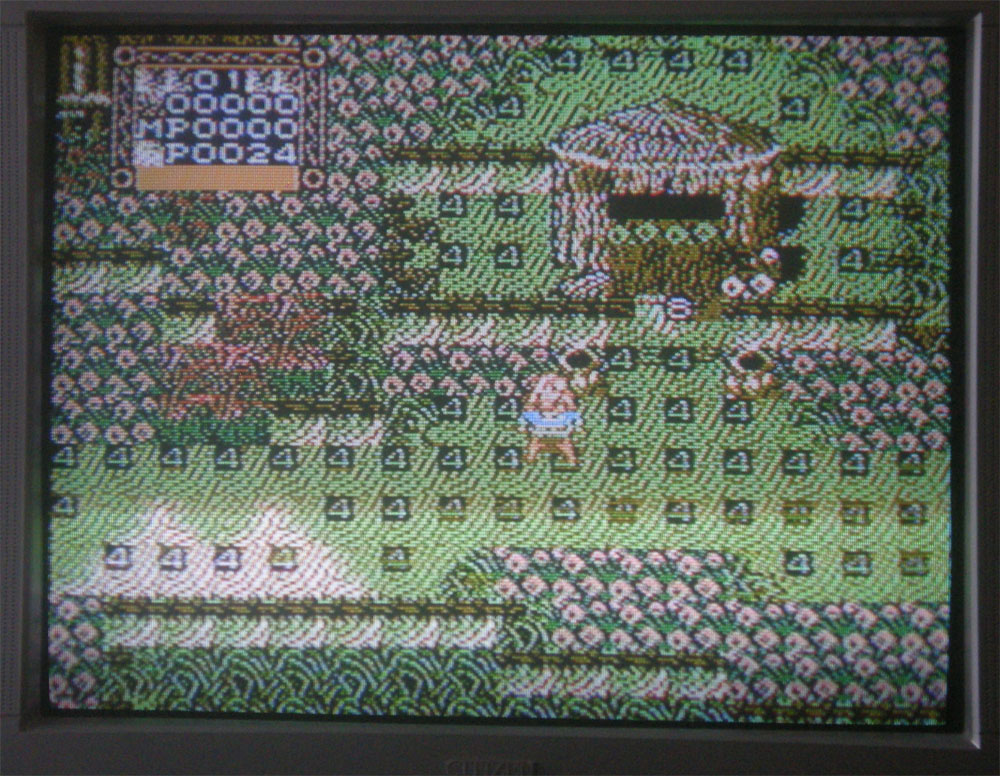
The result of a bad connection between the graphics pins and the NES.
Interestingly, you can tell which particular pins are giving you issues on the original Nintendo by what type of bugs you were getting. Sometimes it would keep resetting. That was because the particular pins that connected to the 'lockout chip' inside the cartridge weren't connecting, so the lockout hardware inside the system would keep resetting the game. Sometimes the game would work, but the graphics would be all messed up. That would be because some the pins used to communicate the graphics weren't correctly connected, but the pins for the actual code were fine. Othertimes you'd just get weird stuff happening, which would usually mean the pins used to transfer the actual code were the ones at issue. And any of these problems could happen in combination with the other.
Parts for system repair and cartridge cleaning are still available online, with specialized stores making tools and parts available. Replacement connectors and other such things are usually only found on ebay or niche websites.